Constitutional Law

The Medical Council’s Guidance on Abortion

The Medical Council is the professional governing body for doctors in Ireland.

It describes its role as being “responsible for protecting the public by promoting and better ensuring high standards of professional conduct and professional education, training and competence among doctors. Doctors must always be guided by their primary responsibility to act in the best interests of their patients.”

To aid Doctors in meeting those responsibilities in difficult situations, the Medical Council has produced The Guide to Professional Conduct and Ethics for Registered Medical Practitioners.

It deals with the expected norms of professional conduct and practice and aims to help guide its member doctors to making good decisions.

Section 21 deals with the issue of Abortion.

Section 21.1 reads

21.1 Abortion is illegal in Ireland except where there is a real and substantial risk to the life (as distinct from the health) of the mother. Under current legal precedent, this exception includes where there is a clear and substantial risk to the life of the mother arising from a threat of suicide. You should undertake a full assessment of any such risk in light of the clinical research on this issue.

Section 21.2 deals with information about abortions.

Section 21.3 deals with the duty to provide care and support for women who have had abortions abroad.

Section 21.4 states

21.4 In current obstetrical practice, rare complications can arise where therapeutic intervention (including termination of a pregnancy) is required at a stage when, due to extreme immaturity of the baby, there may be little or no hope of the baby surviving. In these exceptional circumstances, it may be necessary to intervene to terminate the pregnancy to protect the life of the mother, while making every effort to preserve the life of the baby.

This is the standard by which medical professionals should be judged, by their own regulatory body and by the rest of us.

Corrib Gas update

THE HIGH COURT
Record No: 840P/2005

BETWEEN:

SHELL E & P IRELAND LIMITED

Plaintiff

And

PHILIP MCGRATH, JAMES PHILBIN, WILLIE CORDUFF,
MONICA MULLER, BRID MCGARRY, PETER SWEETMAN

Defendants

And

THE MINISTER FOR COMMUNICATIONS MARINE AND NATURAL RESOURCES, IRELAND AND THE ATTORNEY GENERAL

Defendants to the counterclaim of second and fifth defendants

Update (12th November 2012)

1. On 18th and 19th November 2008, Judge Laffoy heard the application, on motion, of the State to determine as a preliminary issue whether the 2nd and 5th Defendants are precluded from raising “public law issues”.
2. McGarr Solicitors act for Brendan Philbin and Brid McGarry, the 2nd and 5th Defendants. Their counsel are Lord Dan Brennan QC and Genevieve Burke BL. The Chief State Solicitor acts for the Minister, Ireland and the AG. Their Counsel are James Connolly SC and Charles Meenan SC. Eugene F Collins act for SEPIL. Its counsel are Patrick Hanratty SC and Declan McGrath BL.
3. The court has decided (judgment delivered on 4th March 2010) that the 2nd and 5th defendants are NOT precluded from raising “public law issues”.
4. The proceedings commenced in April 2005, when Shell E & P Ireland Ltd. (”SEPIL”), issued plenary summons proceedings against the defendants. Mr. Philbin was committed to prison for 3 months, effectively, on the application of SEPIL on the grounds that he had breached an injunction restraining him from preventing SEPIL from entering his land.
5. In the events that have happened, SEPIL applied for and received the leave of the court to discontinue its claims against the defendants. This happened after SEPIL had received the defences of the defendants and the 2nd and 5th Defendants had counterclaimed against SEPIL and successfully joined the Minister and Ireland and the AG as further defendants to the counterclaim. SEPIL’s discontinuance did not end the counterclaim. The counterclaim is substantial. As against the Minister, Ireland and the AG it claims that certain Compulsory Acquisition Orders made by the Minister regarding the land of the defendants are invalid. It also claims that a consent allegedly made by the Minister in favour of SEPIL, to construct a pipeline over the defendants’ land is invalid.
6. The Minister, Ireland and the AG asserted that these are “public law issues”. They asserted that issues like these can be challenged only under the procedure set out in Order 84 of the Rules of the Superior Courts. They asserted that, that being so, those claims of the defendants are late. They asserted that the claims, to be admissible, should have been made within the time limits of 3 or 6 months (at most) after the making of the CAOs and the consent.
7. SEPIL supported the State parties in their submissions and position.
8. The defendants denied they are confined by the provisions of Order 84 and/or its “time limits”. They said that Order 84 is not an exclusive procedure; that it cannot be used to shut out the hearing of claims against the State where the State has wronged citizens, particularly with regard to the private property of the citizen. They said, consequently, that the counterclaim should proceed to a full hearing on its merits.
9. The State parties appealed the judgment of Laffoy J. to the Supreme Court. The appeal came on for hearing before the Supreme Court on 24th October 2012 and finished that day. Judgment has been reserved.

The Children’s Referendum and Other Trust Issues

During the campaign for the Children’s Rights Referendum every person with any claim to credibility on the issue was in agreement. Children’s lives were going to be made potentially (and, in some cases, actually) better if the country voted Yes.

This morning, as the boxes are opened and the tallies are incomplete, it appears that, as a result of the campaign, the support from the electorate for the Yes side dropped from over 70% to about 55-65%. In addition, very few people turned out to vote and the less affluent an electoral area was, the higher the No vote.

I’m not surprised at this outcome. The explanation for it is simple, I think. Ireland has suffered a complete breakdown in trust. Anyone who appears to be part of the establishment- Journalists, politicians, campaigners, senators, solicitors, barristers- will not be taken at their word. The other side of that is that people who are completely outside the mainstream are given a hearing frequently unwarranted by the merits or lunacy of their arguments.

This is the damage done to the polity by the Bertie Ahern model of government by obfuscation and misdirection, and by the abject failure of the media establishment (or the opposition) to successfully alert the voters what was being done to them.

The politicians who have inherited that mess have never acknowledged that just because they weren’t in government it doesn’t mean they aren’t seen are having been implicated in the Great Failure.

The journalists who report on what the politicians are doing apparently don’t see that they are perceived simply as the other side of the politician coin. Their worldview is identical to that of the political class they write about.

Lawyers should be under no illusions by now as to how their class is perceived. They are seen as the most establishment branch of the establishment- and the least trustworthy to boot.

Campaigners have the greatest claim to being unfairly tainted as members of the political-commentariat establishment. After all, they have devoted much time and effort to actively fighting against the status quo. But nonetheless, there they are, on the telly or the radio, talking in the same sorts of tones and on the same programmes as the rest of them.

I am not saying these feelings are correct, or justified by fact. But I am saying that constantly failing to recognise their reality means that they cannot be addressed.

There will be a Yes vote in this referendum. But we need to get to a point again where that can happen because of, and not despite of, the unanimity of people in authority urging people support a proposal. To do that, we will need an electorate who can assess the merits of an argument for themselves and an establishment that stops asking people to trust them before it has rebuilt that trust.


Flying a Balloon?

Dolly Mapp was a formidable woman. When the cops of Cleveland Ohio arrived at her door, in the early 1960’s or thereabouts, seeking a person in her house, she declined to allow them entry. They called in reinforcements (what a woman!). They searched her house and found pornographic material. She was convicted, lost on appeal and won in the US Supreme court [Mapp v Ohio 367 US 643; S.Ct. 1684]. The cops had searched without a warrant. Dolly had been convicted under the law of Ohio. The US constitution [14th Amendment] protected a citizen from unreasonable search and seizure and in 1914 the US Supreme court had ruled evidence obtained in breach of the constitution could not be relied on in a Federal prosecution. Mapp v Ohio decided that that position also applied to State prosecutions. (Most criminal prosecutions were under State law, so most defendants had been left without the protection of the constitution until Mapp).

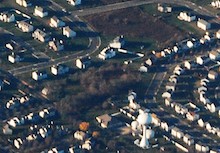
In or about 1986, on a tip-off, police in California flew an aeroplane over the backyard of Mr. Ciraolo. They perceived a crop of marijuana in his yard, got a search warrant and found 73 plants. The California court of appeals applied Katz v United States 389 U.S. 347 and ruled the flight an unauthorised search and a breach of Mr. Ciraolo’s expectation of privacy. The US Supreme court found against Ciraolo on the grounds that he had lost his right of expectation of privacy because he had exposed the back yard to the occupants of the numerous aeroplanes flying over his house. The court disregarded the fact that those occupants were passengers in domestic flights (at great heights, presumably) whose chances of inspecting and recognising marijuana in the backyard were nil.

One wonders what the US court will say when the cops buy and deploy drone aircraft and thermal imaging technology.

Then there are those special places like Birr, County Offaly where, recently, the 41st Irish Hot-Air Balloon competition took place.  Will the Garda Síochána buy a balloon or opt for a drone?

The Gardaí have had a history of their own difficulties with search warrants and the like. See HERE for the latest episode on that front and for a very good analysis of the case law relating to that history.

Truth?

One of us, attending the High court recently, witnessed the following instance of judicial self restraint.

Counsel: “That’s your opinion, judge”.

Judge: “Yes, it is.”

It was a moment of witless insolence. The judge had rejected Counsel’s submissions; Counsel disparaged the rejection by denigrating it as “opinion”.

He was wrong on many fronts.

(1) When you have lost, you have lost.

(2) When you are in a hole, stop digging.

(3) “Opinion” is all we have.

Plato confronted this issue; he opposed objective knowledge and opinion. Presumably this is the basis for the terms of Section 39 of the Broadcasting Act 2009.

Section 39 (1) (a) provides;

“Every broadcaster shall ensure that- “… all news broadcast by the broadcaster is reported and presented in an objective and impartial manner and without any expression of the broadcaster’s own views.”

This is nonsense.

All “news” is subjective; that is, a matter of, or expression of, opinion. It has been selected; it has been expressed in words or images, which have to be selected.

What is probably being addressed is “style” or, possibly, fairness. In short, a finding of breach should made by a literary critic or an artist, not by a judge.

That implies that the wrongful act of a broadcaster is not the promulgation of “his” opinion, but the suppression of alternative views. This is a difficult problem. There are views that ought not to be expressed, if not suppressed. We see that in the public burning of a Koran in the USA.

Domestically, what is in issue is this: on what possible moral basis does the Oireachtas claim the right to restrict the public expression of opinion?

We see another, less sub rosa instance of this in Section 16 (2) of the Legal Services Ombudsman Act 2009, which states;

“The Legal Services Ombudsman when giving evidence under this section shall not question or express an opinion on the merits of any policy of the Government or on the merits of the objectives of such policy.”

The Ombudsman’s evidence will be like a doughnut; it will have a lot missing.

PS. Judicial restraint is a requirement of the job. See HERE.

The Credit Institutions (Stabilisation) Act 2010

The President has signed the Credit Institutions (Stabilisation) Bill into law. She clearly recognised that it might be unconstitutional, in part at least. That is the explanation for her convening the Council of State to advise her on the issue of referring the Bill to the Supreme Court, to rule on its unconstitutionality [under Article 26 of the Constitution].

She has decided not to refer it to the Supreme Court. She signed it into law.

There are advantages and disadvantages to this course. Affected persons or institutions can challenge it in the courts. Under the reference procedure, an affected person will not be able to challenge a law on grounds of unconstitutionality. This arises from the fact that the reference procedure precedes the bringing of an Act into force and no cause of action can subsist until this happens. Following the reference procedure no claim will be entertained that an Act is unconstitutional because the Act has been “cleared” by the Supreme Court.

Arguably, an affected person can bring the better challenge to an Act than can be brought in the reference procedure.

However, if there is no independent-minded person to challenge an Act it will remain unchallenged and will have the full force of law.

Possibly, that is the fate of the Credit Institutions (Stabilisation) Act 2010.

Who imagines, for instance, Allied Irish Banks plc, a likely candidate for being an “affected person”, mounting a legal challenge to the operation of the Act? It is, effectively, controlled by the Government.

No, the real legitimus contradictor was the Oireachtas. It, too, is controlled by the Government and is incapable of mounting a challenge.

POSTSCRIPT:

Well, I was wrong. See this report from the Irish Times. l It may well be that the media will represent the public interest. Indeed, it will represent the interests of the judiciary; it is not in Ireland’s interests that the Judicial arm of the State be swallowed in the morass that Fianna Fail and the Progressive Democrats have created. We now know that barristers and solicitors are very poor judges of economic and financial matters. They (barristers) are the pool from which the judiciary are drawn. Why should they think they are superior?

Du.. Du.. Dubonnet!

Congratulations to Mr. Pearse Doherty.

In 2007 McGarr Solicitors represented Catherine Murphy and Finian McGrath in a High Court challenge (Murphy & Anor -v- Minister For Environment & Ors [2007] IEHC 185) to the failure of the Oireachtas to revise the constituency of Dublin West (among others) due to the increase of population since the previous election. On a revision, based on the latest Census of Population, Dublin West would have had an extra Dail seat.

The Defendants were the Minister for the Environment, Ireland and the Attorney General. Under the Constitution, the “real” culprit was the Oireachtas. The Court said;

“It is important to note, firstly, that the obligation is one on the Oireachtas rather than the Government.”

It is notorious that this view of the Oireachtas is seriously deficient, although Constitutionally correct. The Oireachtas is powerless without the active support of the Government. Failures of the Oireachtas are in fact failures of the Government.

Our plaintiffs, Catherine Murphy and Finian McGrath failed in their challenge to defend democratic principles; Pearse Doherty has not.

Leaving aside issues as to the differences in a failure to move a writ for a bye election and a failure to revise a constituency, were we asking for the wrong “order”?

A sometime television advertisement showed a customer in a crowded pub catching the attention of the barman by asking for a Du.. Du.. Dubonnet, and being heard.

No more pints of Guinness!

Woof, Woof

Ireland has strange Regulators, as we have learned. For example, what is the Irish Data Protection Commissioner doing about the Google “Street View” scandal?

The scandal involved the deliberate collection, by Google, of wi-fi data, through its Street View vehicles. Google Street View is part of Google Maps and Google Earth. It uses adapted vehicles (mostly cars) to travel through public locations in at least thirty countries in the world. The vehicles have cameras to record a 360 degree view of each location.

I saw one in Dublin in August.

While it was using the vehicles as a camera platform, Google also used them to secretly collect data passing over wireless networks. That data would be all, or part, of emails, passwords, videos, audio files, documents and network names.

Seemingly, German privacy authorities discovered this Google secret early in 2010 and launched an investigation. A proper investigation would require that the evidence be preserved, would it not? Here’s what Google put up on its website:


“On Friday May 14 the Irish Data Protection Authority asked us to delete the payload data we collected in error in Ireland. We can confirm that all data identified as being from Ireland was deleted over the weekend in the presence of an independent third party. We are reaching out to Data Protection Authorities in the other relevant countries about how to dispose of the remaining data as quickly as possible.”

This was more than the Data Protection Commissioner told us. In fact he told us nothing of the issue. HERE‘s his website.

Google’s reference to the data being “…collected in error…” was disingenuous. The data was collected calculatedly.

Bank robbery is irresistible if the only sanction is that you have to give the money back if you are caught.

Did we actually get our money back?

Digital Rights Ireland: High Court Submissions

The High Court is seeking submissions from the parties to the Digital Rights Ireland case. See the Pleadings HERE.

See the most recent post on the issue HERE

The Court is seeking suggestions as to the form of questions to be submitted to the European Court of Justice. DRI has, in its Statement of Claim, suggested a form of question or questions to be submitted.

Currently, DRI has furnished its expanded draft of the terms of the Reference to be sent to the ECJ. The State, through its Counsel, has agreed to revert to DRI by 17th August 2010 with its responses, if any.

The case will be re-listed before the Court in October.

Digital Rights Ireland Data Retention Case

The High Court is seeking submissions from the parties to the Digital Rights Ireland case. See the Pleadings HERE.

The Court is seeking suggestions as to the form of questions to be submitted to the European Court of Justice. DRI has, in its Statement of Claim, suggested a form of question or questions to be submitted. Clearly, the High Court is not convinced that the form of question suggested by DRI is exactly right (or is seeking the assent of the State to DRI’s form of question). The hearing next Wednesday will show us which is the case.

DRI’s case is brought in its own name, but it is an action with implications for every citizen of Ireland, whether they know it or not.

For this reason McGarr Solicitors have published DRI’s pleadings on the Web since 2006. This is reasonable; the Respondents are, in effect and name, the State. The issues are public law issues and there can be no prevailing claim to privacy on those issues from these Respondents. It is worth noting that it is not common, to put it at its lowest, to see pleadings of current proceedings published but there is usually an exception to every rule and we have one here.

Between now and next Wednesday we will re-formulate the questions to go to the ECJ. These questions will form part of the Order of the Court making the reference to the ECJ. We currently estimate a two year wait to get a hearing in the ECJ. Delay is inevitable; every Member State of the EU has a right to intervene and be heard in the matter. That implies that every Member State must receive a copy of the Questions and the parties’ submissions.